%2Ffit-in%2F250x250%2Fguide_websites%2F10559%2Fimages%2Fbottomsup.png&w=1920&q=100)
King Mackerel Fishing Success in Vero Beach FL
King Mackerel Fishing in Vero Beach - What to Expect
%2F%2Fusers%2F03fa9f53-1d0c-4f9e-b150-7d488d0d0baa%2Fimages%2Fking-mackerel-vero-beach-fishing-2567.jpg&w=1920&q=75)
Fishing Charter by Captain Justin Gay in May
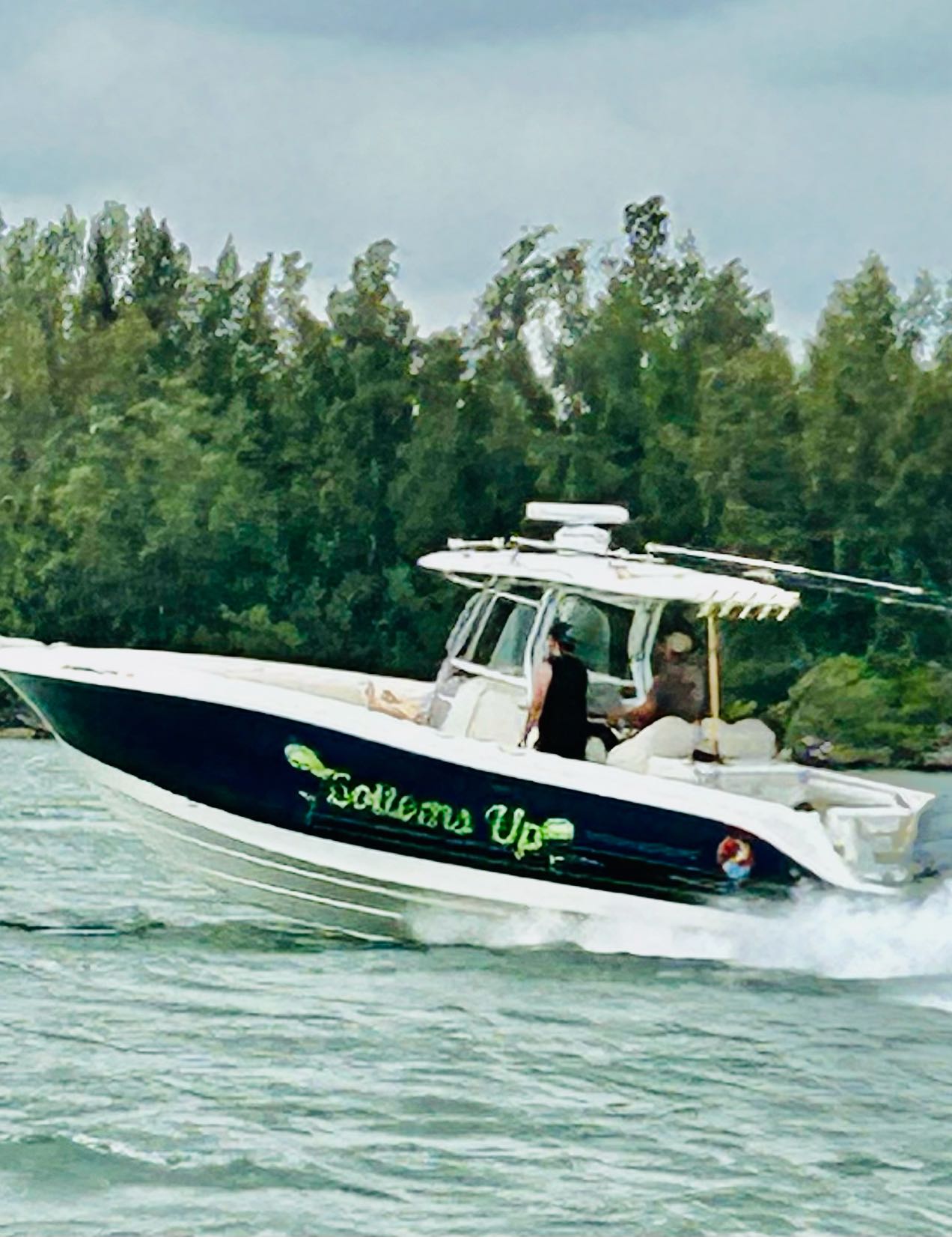
Meet your Captain Justin Gay
- Vero Beach Fishing Thrills, Bottoms Up Charters


Summary
Join Captain Justin Gay on a fishing charter in Vero Beach for an exciting day targeting king mackerel. This May trip showcases successful catches and the productive waters of Florida's Atlantic coast. Learn what makes Vero Beach a premier destination for king mackerel fishing and book your adventure with Bottoms Up Fishing Charters.
Fishing Charter with Captain Justin Gay - Rates & Booking
Captain Justin Gay of Bottoms Up Fishing Charters on Tuesday, May 20 specializes in king mackerel fishing in Vero Beach. This fishing charter targets some of the most aggressive and rewarding saltwater species available off Florida's east coast. To book your fishing charter and learn about current rates, guest capacity, and trip inclusions, contact Bottoms Up Fishing Charters directly for availability and pricing information.
Highlights of King Mackerel Fishing
King mackerel are known for their speed, strength, and hard-fighting nature, making them a favorite target for offshore and inshore anglers. Vero Beach waters provide excellent conditions for pursuing these fish, with multiple catches shown in this gallery reflecting the productive fishing grounds Captain Gay accesses. The combination of proper technique, experienced guidance, and knowledge of local fisheries creates the foundation for successful trips.
Anglers on this charter experienced the excitement of landing multiple king mackerel, demonstrating the potential for multiple hookups during a single trip. The cleaning station display shows fish of impressive size, indicating the quality of specimens found in Vero Beach waters during the spring season.
Local Species Insights: King Mackerel
King mackerel are predatory fish that inhabit coastal Atlantic waters from New England to Brazil, with strong populations along Florida's coast. These fish are built for speed and aggression, with streamlined bodies, sharp teeth, and the ability to reach speeds of 40 miles per hour or more. They are primarily hunters that feed on smaller fish species, often schooling with other mackerel and jacks.
Understanding king mackerel behavior is key to successful fishing. These fish tend to suspend at varying depths depending on water temperature, time of day, and bait availability. They respond to live bait presentations and moving lures that mimic wounded prey. In Vero Beach, king mackerel are found both inshore and offshore, with seasonal movements influenced by water temperature and food sources.
The habitat around Vero Beach includes nearshore reefs, drop-offs, and structure that concentrate both bait and king mackerel. These areas provide thermal refuge and hunting grounds where mackerel congregate. Spring fishing in May represents an excellent window when fish are active and feeding in preparation for summer spawning.
Anglers pursuing king mackerel need to understand tackle requirements - these fish have rough mouths and sharp teeth that require appropriate line strength and leader materials. Live bait presentation, trolling with medium-sized lures, and bottom fishing with live mackerel or bonito are all effective techniques. The fighting power of these fish provides an intense experience that combines precision casting with physical challenge.
Plan Your King Mackerel Fishing Day
A day targeting king mackerel with Captain Justin Gay typically involves accessing prime fishing grounds where bait and structure attract feeding mackerel. The charter format allows anglers to focus on technique and presentation while the captain handles navigation and local knowledge. Whether pursuing these fish inshore or offshore, proper understanding of conditions and species behavior increases success potential. Contact Bottoms Up Fishing Charters to discuss timing, group size, and what to expect during your charter.
Fishing in Vero Beach: King Mackerel
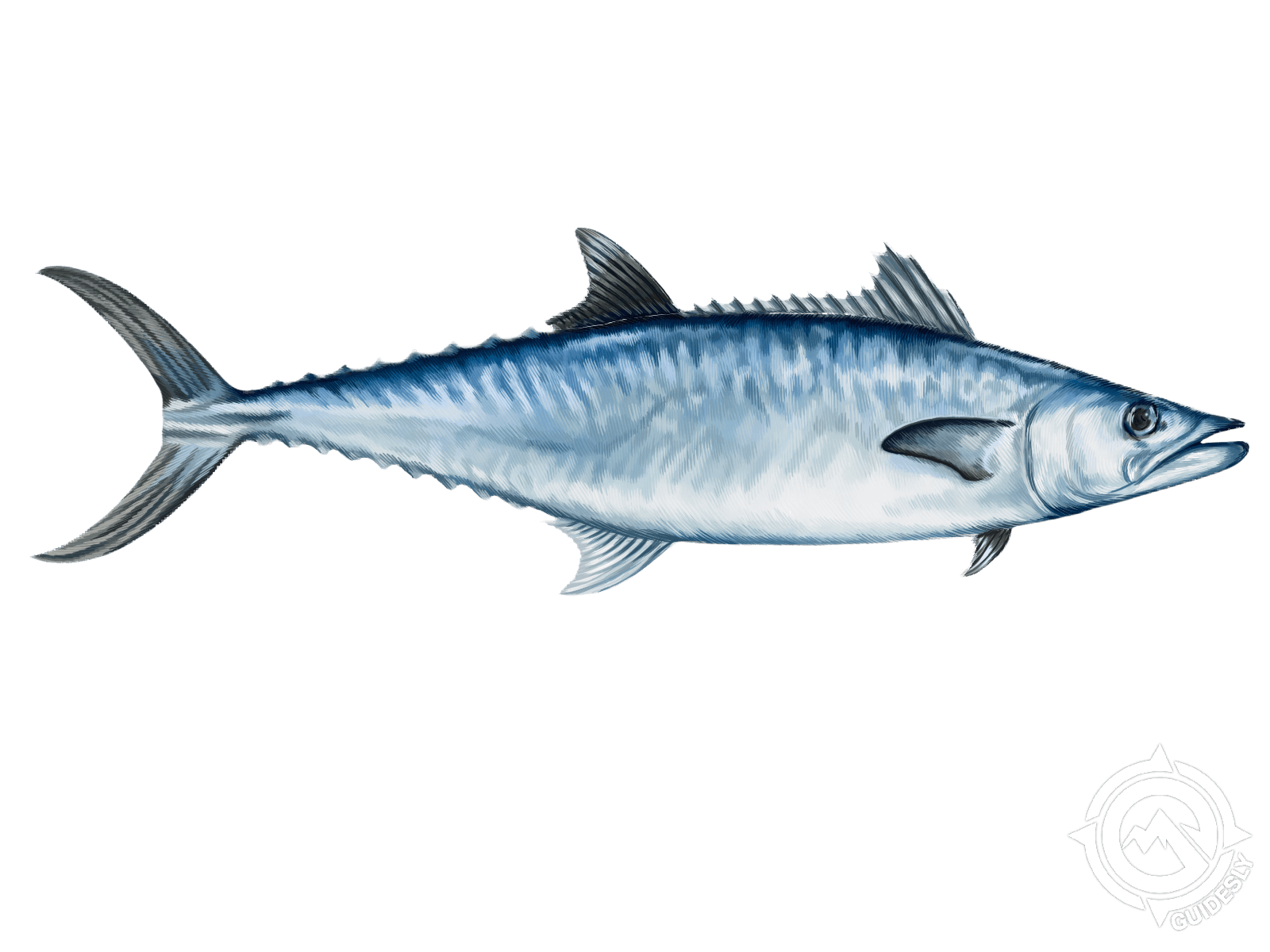
King Mackerel Overview
The King Mackerel (Scomberomorus cavalla) is a prized saltwater gamefish belonging to the family Scombridae and order Perciformes. Also known as Kingfish or Spanish Mackerel, this migratory powerhouse is famous among anglers for its lightning-fast runs and aggressive strikes. What makes the King Mackerel instantly recognizable are its small, loosely attached scales covering an olive-green back that contrasts beautifully with a silvery-white belly and shimmering, rosy iridescent sides. Younger specimens sometimes display brownish or yellowish spots on their flanks. Native to subtropical waters, King Mackerel are found throughout the Atlantic Coast and Gulf of Mexico, with particularly strong populations near North Carolina and Brazil. If you've ever chased a silver bullet through the water off the coast, chances are you've tangled with one of these magnificent fish.
King Mackerel Habitat and Distribution
King Mackerel are subtropical specialists that thrive in warm Atlantic and Gulf waters, ranging from the Gulf of Maine down through North Carolina, the entire Gulf of Mexico, and extending to Brazil—especially around Rio de Janeiro where they're incredibly abundant. These fish are also found in the Bay of Bengal and throughout the Indian Ocean and Arabian Sea. They prefer depths between 40 and 150 feet during normal conditions, though larger specimens often venture inshore to harbors and inlet waters as deep as 590 feet. Water temperature is crucial to their distribution; they're most active and concentrated in waters ranging from 68 to 84°F. Understanding these depth and temperature preferences is essential for anyone planning a King Mackerel fishing adventure along the Atlantic coast.
King Mackerel Size and Weight
King Mackerel are considered medium-sized fish, with a typical size range of 19 to 72 inches in length. Most caught specimens weigh between 10 and 20 pounds, though specimens commonly reach 30 pounds, and trophy-sized individuals have exceeded 90 pounds. An interesting biological detail: females significantly outweigh males at the same age. For example, a seven-year-old female King Mackerel might tip the scales at 22 pounds, while a male of identical age weighs only about 11 pounds. This sexual dimorphism in growth rates makes trophy hunting for larger specimens a realistic goal for dedicated anglers in coastal regions from North Carolina to Texas.
King Mackerel Diet and Behavior
As an opportunistic carnivore with an almost legendary voracious appetite, the King Mackerel is an aggressive hunter that feeds on a varied menu depending on seasonal availability. Their diet includes Blue Runner, Northern Mackerel, Striped Anchovy, Weakfish, Cutlassfish, Jack, Menhaden, and squid. What makes these fish particularly thrilling for anglers is their explosive feeding behavior—they're known to strike with extreme aggression and make blistering runs that can strip line from even well-spooled reels. Their teeth are notably similar to those of Bluefish, making them formidable predators capable of inflicting serious damage to bait and lures alike. King Mackerel behavior varies seasonally with water temperature and bait availability; they're most active when waters warm and migratory baitfish move through their territories. Their speed is legendary and matched only by the Wahoo, their distant relative, making them one of the most exciting gamefish to pursue.
King Mackerel Spawning and Seasonal Activity
King Mackerel are broadcast spawners, releasing sperm and eggs into the water column where fertilization occurs by chance. One of the most remarkable aspects of their reproductive biology is the incredibly short incubation period—fertilized eggs hatch in less than a day! This rapid development strategy allows populations to capitalize on favorable feeding conditions. Their migratory patterns are closely tied to water temperature; as coastal waters warm in spring and early summer, King Mackerel move northward and into shallower waters, creating peak fishing opportunities. As fall arrives and water temperatures drop, they migrate southward to warmer Gulf waters and deeper offshore zones. Understanding these seasonal movements is critical for planning successful fishing trips, whether you're targeting them off North Carolina in summer or pursuing Gulf populations in winter.
King Mackerel Techniques for Observation and Capture
Trolling with Large Lures: The most effective method for King Mackerel involves trolling at speeds between 8 and 12 knots using large planers, heavy tackle rated for 30- to 50-pound test, and vibrant artificial lures in silver, chartreuse, or blue patterns. Trolling depths of 40 to 150 feet are ideal in most locations. Around North Carolina's Outer Banks, summer trolling from June through August produces consistent strikes as migratory populations move through these rich fishing grounds.
Live Bait Rigging: If live bait is your preference, use a strong metal leader and tie two hooks to maximize your chances. Attach the first hook (single or treble) through the live bait's mouth and nose, then place a second treble hook through the back or allow it to dangle freely. This rigging strategy accounts for King Mackerel's tendency to bite at the rear section of baitfish first. Live mullet, mackerel, and herring work exceptionally well and trigger aggressive strikes.
Jigging and Wreck Fishing: Vertical jigging over reefs, wrecks, and deep structure with metal jigs (2 to 4 ounces) is a highly productive approach, particularly in offshore zones. Drop your jig to structure, then employ aggressive jigging motions with rapid rod snaps. This method concentrates effort in high-probability zones and produces strikes from feeding fish holding in deeper water or around cover.
King Mackerel Culinary and Utilization Notes
King Mackerel has grayish flesh with relatively high fat content and was only marketed fresh commercially beginning in 2005. While the fish is edible, potential consumers should be aware that King Mackerel accumulates significant mercury levels—alongside Tilefish, Shark, and Swordfish—making it advisable for children and pregnant women to avoid or strictly limit consumption. For anglers who choose to keep their catch, the grayish meat is best prepared fresh and suited to grilling, baking, or smoking. The high oil content makes it forgiving to cook and provides good flavor when properly prepared. Many recreational anglers practice catch-and-release to preserve populations and avoid mercury exposure concerns while still enjoying the thrilling fight these powerful fish provide.
King Mackerel Frequently Asked Questions
Q: What is the best bait or lure for catching King Mackerel?
A: Live bait such as mullet, mackerel, and herring work exceptionally well when rigged on metal leaders with double hooks. For artificial lures, large spoons, plugs, and jigs in silver, chartreuse, or blue patterns fished on heavy 30- to 50-pound tackle produce consistent results. Trolling these artificials at 8 to 12 knots is the most popular method among experienced anglers.
Q: Where can I find King Mackerel near major coastal cities?
A: King Mackerel are abundant throughout the Atlantic Coast from Texas to North Carolina, with prime populations in the Gulf of Mexico and nearshore waters. Summer months bring them northward; the Outer Banks of North Carolina hosts excellent populations June through September. Gulf ports in Texas and Florida offer year-round opportunities, particularly in the deeper channels and offshore zones.
Q: How do I distinguish a King Mackerel from a Spanish Mackerel or Cero?
A: The key distinguishing feature is the lateral line pattern. On King Mackerel, the lateral line runs along the body but stops abruptly around mid-body. In contrast, Spanish Mackerel and Cero species have lateral lines that slope gradually downward from the gill cover all the way to the tail. Additionally, King Mackerel typically grow larger and have larger teeth relative to their cousins.
Q: Is King Mackerel good to eat?
A: King Mackerel has flavorful, oily flesh that takes well to grilling and smoking. However, be aware that this species accumulates mercury at concerning levels. The FDA recommends that children and pregnant women avoid consumption. For others, occasional consumption of fresh King Mackerel is generally considered acceptable, though catch-and-release is increasingly popular to preserve populations and avoid potential health concerns.
Q: When is the best time to catch King Mackerel?
A: The prime fishing season varies by location. Along the Atlantic, late spring through early fall (May through September) offers the most consistent action as water temperatures warm and fish move northward. In Gulf waters, December through March provides excellent opportunities as fish congregate in deeper, warmer zones. Early morning and late afternoon typically produce the most aggressive feeding.
Q: What tackle and equipment do I need for King Mackerel fishing?
A: Use heavy-duty saltwater rods rated for 30- to 50-pound test line paired with multiplier reels capable of holding 300+ yards of backing. A strong metal leader (60- to 100-pound test) is essential, as King Mackerel possess teeth similar to Bluefish and will bite through monofilament instantly. Incorporate quality ball bearings and swivels into your rigging to reduce line twist during trolling operations.