%2Ffit-in%2F250x250%2Fguide_websites%2F10559%2Fimages%2Fbottomsup.png&w=1920&q=100)
Cobia and King Mackerel Fishing in Vero Beach FL
Fishing Charter Experience in Vero Beach - What to Expect
%2F%2Fusers%2F03fa9f53-1d0c-4f9e-b150-7d488d0d0baa%2Fimages%2Fvero-beach-mixed-species-catch-2912.jpg&w=1920&q=75)
Fishing Charter by Captain Justin Gay in June
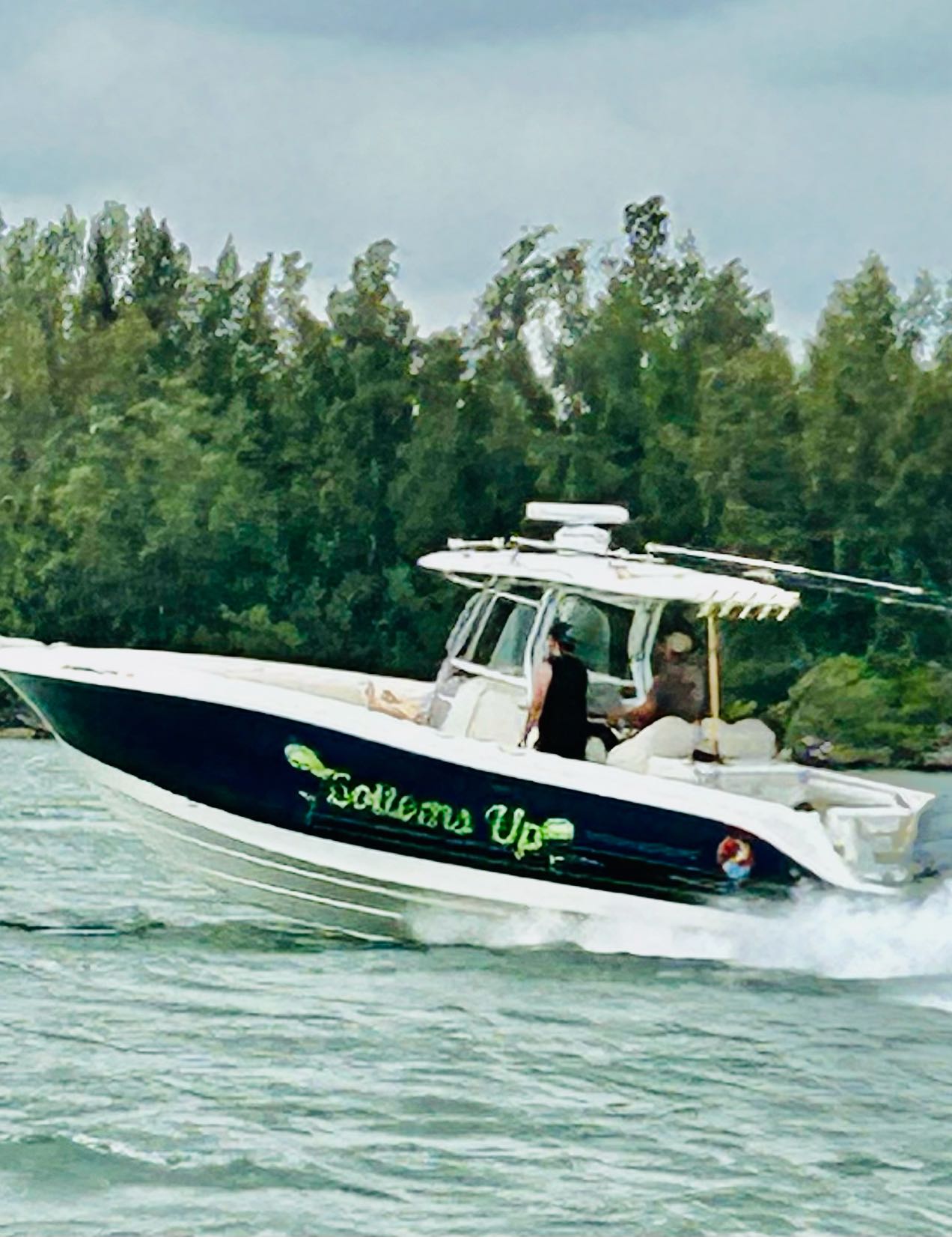
Meet your Captain Justin Gay
- Vero Beach Fishing Thrills, Bottoms Up Charters


Summary
Join Captain Justin Gay on a fishing charter in Vero Beach on Tuesday, June 3rd for an opportunity to land cobia, king mackerel, and lane snapper in Atlantic waters. This charter combines expert local knowledge with proven fishing techniques to deliver consistent results for anglers of all skill levels.
Fishing Charter with Captain Justin Gay - Rates & Booking
Captain Justin Gay of Bottoms Up Fishing Charters operates out of Vero Beach on Tuesday, June 3rd, delivering results-driven fishing experiences for serious anglers. This charter targets multiple species including cobia, king mackerel, and lane snapper - fish that demand skill and strategy to land consistently.
Contact Bottoms Up Fishing Charters to reserve your spot and confirm pricing, group size, and any specific inclusions. Captain Gay brings years of Atlantic coast expertise to every trip, ensuring you're positioned where the fish are actively feeding.
Highlights of Your Vero Beach Fishing Adventure
The mixed species display shows exactly what consistent effort produces in these waters. Cobia are powerful fighters known for explosive strikes and aggressive runs. King mackerel deliver speed and strength, while lane snapper provide reliable action throughout the day. This combination of species creates varied, engaging fishing with different techniques and presentations required for each.
Vero Beach offers excellent year-round fishing conditions with productive offshore and nearshore grounds. The Atlantic waters here support healthy populations of gamefish, and Captain Gay knows the specific structures, depths, and seasonal patterns that put anglers on active fish consistently.
Local Species Insights: Cobia, King Mackerel, and Lane Snapper
Cobia are migratory fish that appear in Vero Beach waters seasonally, known for their strength and willingness to take live bait or artificial presentations. They typically hunt in structure and current, feeding aggressively on baitfish. Landing a cobia requires solid fighting techniques - these fish make long, sustained runs and headshakes that test both tackle and angler skill.
King mackerel roam the offshore grounds and nearshore zones, hunting at high speeds. They're visual predators that respond to flash and movement, making them exciting targets for trolling and live bait presentations. King mackerel fights are characterized by speed and power, with several explosive runs typical during a battle.
Lane snapper provide consistent daytime action, particularly over deeper structure and reefs. They're smaller than cobia or king mackerel but incredibly scrappy, and they keep the rods bending between strikes from larger species. Snapper fishing builds throughout the day as water conditions warm, and they're excellent table fare if you plan to keep fish for meals.
The Vero Beach fishery balances all three species effectively throughout the year, though seasonal patterns affect availability. Captain Gay adjusts tactics, locations, and timing based on what's actively feeding - a critical advantage that separates experienced charter captains from less effective operators. His knowledge of current patterns, moon phases, bait availability, and recent catch reports means you're fishing during optimal conditions.
These species require different tackle setups and fight styles. Cobia and king mackerel demand heavier line and strong drags, while snapper fishing uses lighter presentations over specific bottom structure. Charter equipment is typically rigged for mixed species fishing, and Captain Gay handles the technical details while coaching anglers through the fight and landing process.
The Atlantic waters off Vero Beach offer consistent fishing with good sight lines and active bait populations supporting aggressive feeding. Water temperature, current flow, and seasonal bait migrations all factor into daily positioning decisions. Experienced captains like Justin Gay excel at reading these conditions and positioning the charter in high-percentage zones before trips even begin.
Fishing in Vero Beach: King Mackerel, Lane Snapper and Cobia
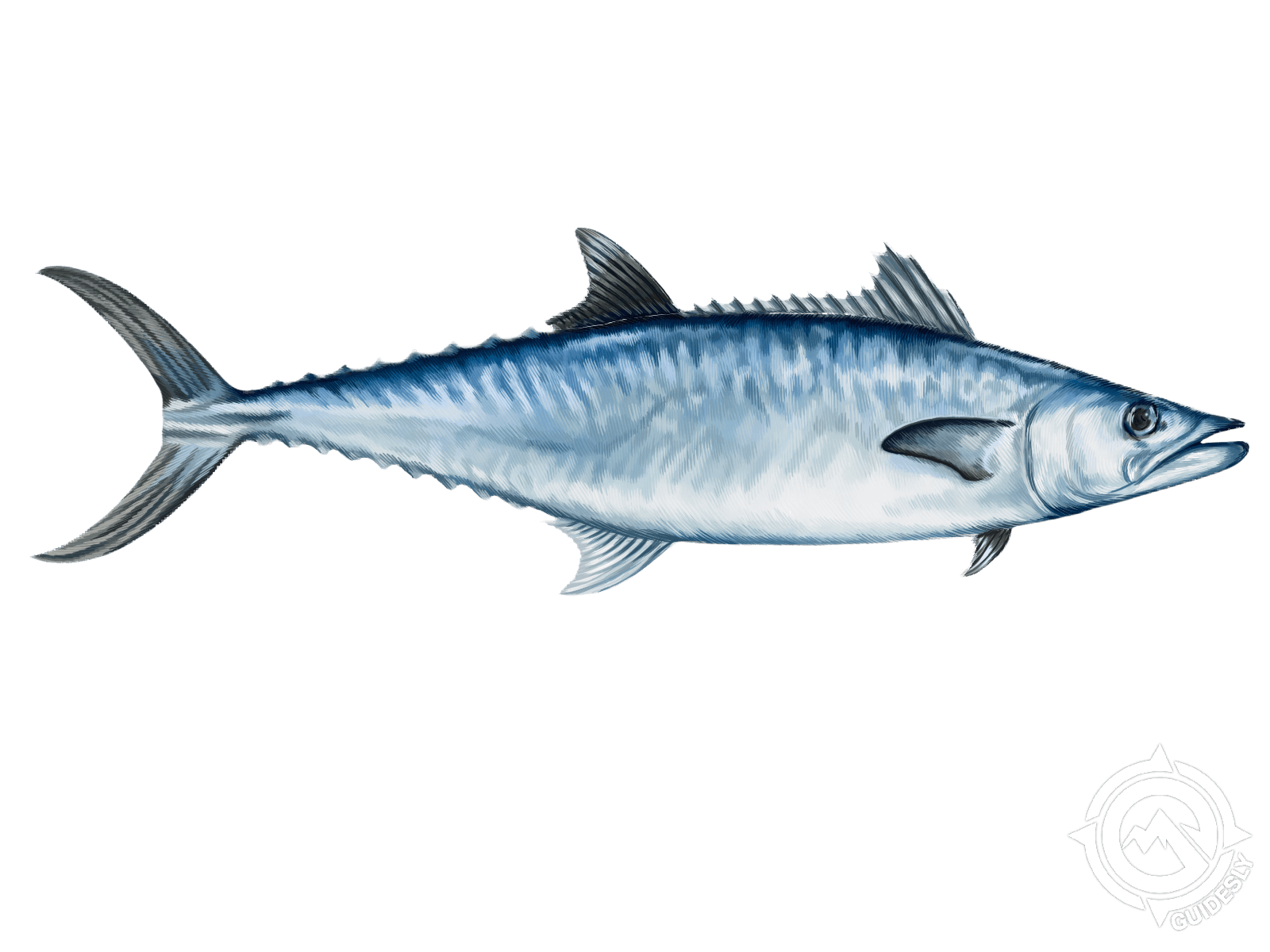
King Mackerel Overview
The King Mackerel (Scomberomorus cavalla) is a prized saltwater gamefish belonging to the family Scombridae and order Perciformes. Also known as Kingfish or Spanish Mackerel, this migratory powerhouse is famous among anglers for its lightning-fast runs and aggressive strikes. What makes the King Mackerel instantly recognizable are its small, loosely attached scales covering an olive-green back that contrasts beautifully with a silvery-white belly and shimmering, rosy iridescent sides. Younger specimens sometimes display brownish or yellowish spots on their flanks. Native to subtropical waters, King Mackerel are found throughout the Atlantic Coast and Gulf of Mexico, with particularly strong populations near North Carolina and Brazil. If you've ever chased a silver bullet through the water off the coast, chances are you've tangled with one of these magnificent fish.
King Mackerel Habitat and Distribution
King Mackerel are subtropical specialists that thrive in warm Atlantic and Gulf waters, ranging from the Gulf of Maine down through North Carolina, the entire Gulf of Mexico, and extending to Brazil—especially around Rio de Janeiro where they're incredibly abundant. These fish are also found in the Bay of Bengal and throughout the Indian Ocean and Arabian Sea. They prefer depths between 40 and 150 feet during normal conditions, though larger specimens often venture inshore to harbors and inlet waters as deep as 590 feet. Water temperature is crucial to their distribution; they're most active and concentrated in waters ranging from 68 to 84°F. Understanding these depth and temperature preferences is essential for anyone planning a King Mackerel fishing adventure along the Atlantic coast.
King Mackerel Size and Weight
King Mackerel are considered medium-sized fish, with a typical size range of 19 to 72 inches in length. Most caught specimens weigh between 10 and 20 pounds, though specimens commonly reach 30 pounds, and trophy-sized individuals have exceeded 90 pounds. An interesting biological detail: females significantly outweigh males at the same age. For example, a seven-year-old female King Mackerel might tip the scales at 22 pounds, while a male of identical age weighs only about 11 pounds. This sexual dimorphism in growth rates makes trophy hunting for larger specimens a realistic goal for dedicated anglers in coastal regions from North Carolina to Texas.
King Mackerel Diet and Behavior
As an opportunistic carnivore with an almost legendary voracious appetite, the King Mackerel is an aggressive hunter that feeds on a varied menu depending on seasonal availability. Their diet includes Blue Runner, Northern Mackerel, Striped Anchovy, Weakfish, Cutlassfish, Jack, Menhaden, and squid. What makes these fish particularly thrilling for anglers is their explosive feeding behavior—they're known to strike with extreme aggression and make blistering runs that can strip line from even well-spooled reels. Their teeth are notably similar to those of Bluefish, making them formidable predators capable of inflicting serious damage to bait and lures alike. King Mackerel behavior varies seasonally with water temperature and bait availability; they're most active when waters warm and migratory baitfish move through their territories. Their speed is legendary and matched only by the Wahoo, their distant relative, making them one of the most exciting gamefish to pursue.
King Mackerel Spawning and Seasonal Activity
King Mackerel are broadcast spawners, releasing sperm and eggs into the water column where fertilization occurs by chance. One of the most remarkable aspects of their reproductive biology is the incredibly short incubation period—fertilized eggs hatch in less than a day! This rapid development strategy allows populations to capitalize on favorable feeding conditions. Their migratory patterns are closely tied to water temperature; as coastal waters warm in spring and early summer, King Mackerel move northward and into shallower waters, creating peak fishing opportunities. As fall arrives and water temperatures drop, they migrate southward to warmer Gulf waters and deeper offshore zones. Understanding these seasonal movements is critical for planning successful fishing trips, whether you're targeting them off North Carolina in summer or pursuing Gulf populations in winter.
King Mackerel Techniques for Observation and Capture
Trolling with Large Lures: The most effective method for King Mackerel involves trolling at speeds between 8 and 12 knots using large planers, heavy tackle rated for 30- to 50-pound test, and vibrant artificial lures in silver, chartreuse, or blue patterns. Trolling depths of 40 to 150 feet are ideal in most locations. Around North Carolina's Outer Banks, summer trolling from June through August produces consistent strikes as migratory populations move through these rich fishing grounds.
Live Bait Rigging: If live bait is your preference, use a strong metal leader and tie two hooks to maximize your chances. Attach the first hook (single or treble) through the live bait's mouth and nose, then place a second treble hook through the back or allow it to dangle freely. This rigging strategy accounts for King Mackerel's tendency to bite at the rear section of baitfish first. Live mullet, mackerel, and herring work exceptionally well and trigger aggressive strikes.
Jigging and Wreck Fishing: Vertical jigging over reefs, wrecks, and deep structure with metal jigs (2 to 4 ounces) is a highly productive approach, particularly in offshore zones. Drop your jig to structure, then employ aggressive jigging motions with rapid rod snaps. This method concentrates effort in high-probability zones and produces strikes from feeding fish holding in deeper water or around cover.
King Mackerel Culinary and Utilization Notes
King Mackerel has grayish flesh with relatively high fat content and was only marketed fresh commercially beginning in 2005. While the fish is edible, potential consumers should be aware that King Mackerel accumulates significant mercury levels—alongside Tilefish, Shark, and Swordfish—making it advisable for children and pregnant women to avoid or strictly limit consumption. For anglers who choose to keep their catch, the grayish meat is best prepared fresh and suited to grilling, baking, or smoking. The high oil content makes it forgiving to cook and provides good flavor when properly prepared. Many recreational anglers practice catch-and-release to preserve populations and avoid mercury exposure concerns while still enjoying the thrilling fight these powerful fish provide.
King Mackerel Frequently Asked Questions
Q: What is the best bait or lure for catching King Mackerel?
A: Live bait such as mullet, mackerel, and herring work exceptionally well when rigged on metal leaders with double hooks. For artificial lures, large spoons, plugs, and jigs in silver, chartreuse, or blue patterns fished on heavy 30- to 50-pound tackle produce consistent results. Trolling these artificials at 8 to 12 knots is the most popular method among experienced anglers.
Q: Where can I find King Mackerel near major coastal cities?
A: King Mackerel are abundant throughout the Atlantic Coast from Texas to North Carolina, with prime populations in the Gulf of Mexico and nearshore waters. Summer months bring them northward; the Outer Banks of North Carolina hosts excellent populations June through September. Gulf ports in Texas and Florida offer year-round opportunities, particularly in the deeper channels and offshore zones.
Q: How do I distinguish a King Mackerel from a Spanish Mackerel or Cero?
A: The key distinguishing feature is the lateral line pattern. On King Mackerel, the lateral line runs along the body but stops abruptly around mid-body. In contrast, Spanish Mackerel and Cero species have lateral lines that slope gradually downward from the gill cover all the way to the tail. Additionally, King Mackerel typically grow larger and have larger teeth relative to their cousins.
Q: Is King Mackerel good to eat?
A: King Mackerel has flavorful, oily flesh that takes well to grilling and smoking. However, be aware that this species accumulates mercury at concerning levels. The FDA recommends that children and pregnant women avoid consumption. For others, occasional consumption of fresh King Mackerel is generally considered acceptable, though catch-and-release is increasingly popular to preserve populations and avoid potential health concerns.
Q: When is the best time to catch King Mackerel?
A: The prime fishing season varies by location. Along the Atlantic, late spring through early fall (May through September) offers the most consistent action as water temperatures warm and fish move northward. In Gulf waters, December through March provides excellent opportunities as fish congregate in deeper, warmer zones. Early morning and late afternoon typically produce the most aggressive feeding.
Q: What tackle and equipment do I need for King Mackerel fishing?
A: Use heavy-duty saltwater rods rated for 30- to 50-pound test line paired with multiplier reels capable of holding 300+ yards of backing. A strong metal leader (60- to 100-pound test) is essential, as King Mackerel possess teeth similar to Bluefish and will bite through monofilament instantly. Incorporate quality ball bearings and swivels into your rigging to reduce line twist during trolling operations.
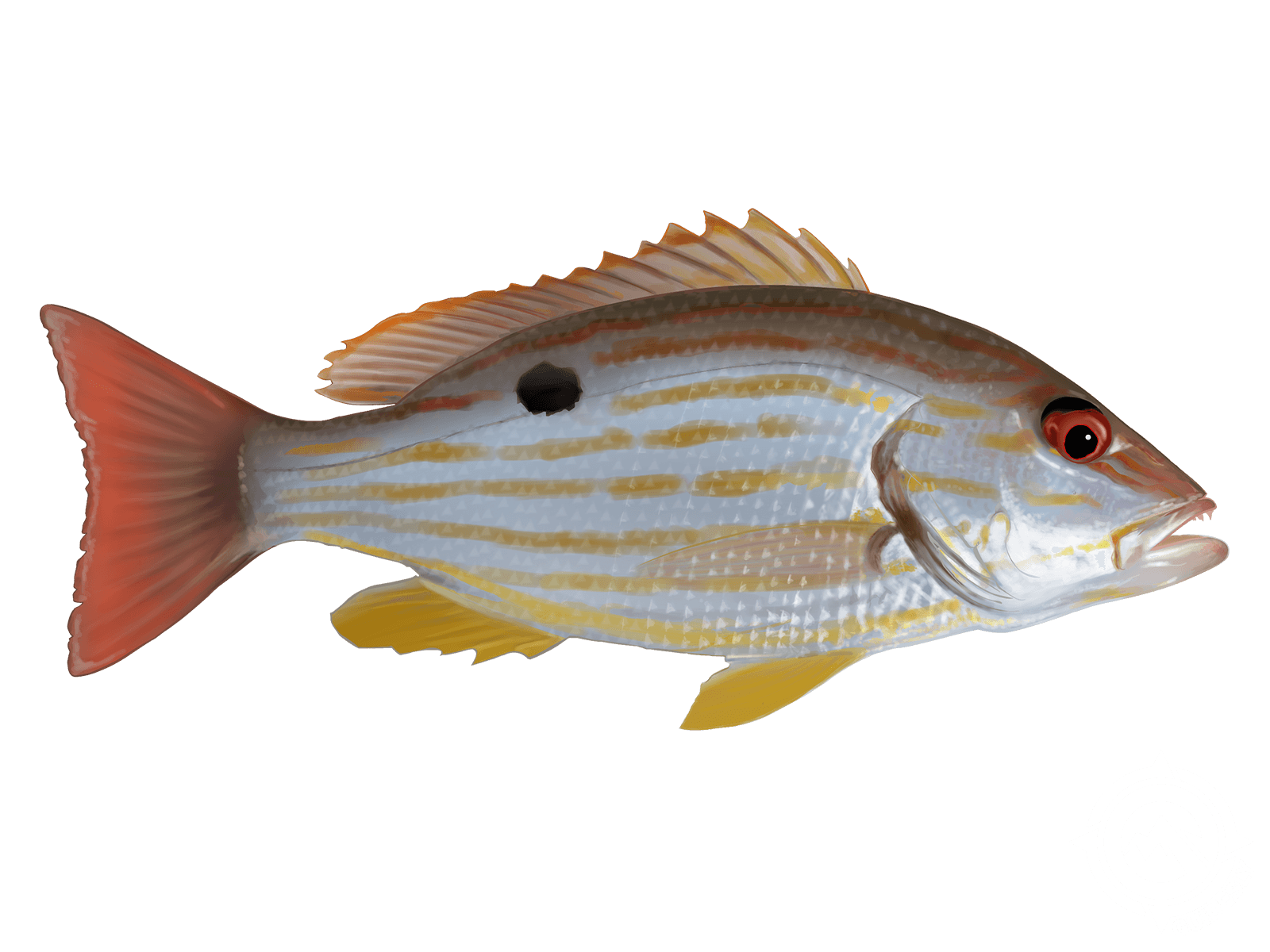
Lane Snapper Overview
The Lane Snapper (Lutjanus synagris) is a vibrant and spirited member of the Lutjanidae family within the order Perciformes. This almond-shaped coral fish gets its name from the striking pink and yellow lines that run along its silver body, resembling colorful candy cane stripes or traffic lanes. Found throughout the western Atlantic Ocean from North Carolina down to Brazil, the Lane Snapper is a favorite among both recreational anglers and seasoned fishermen seeking an exciting catch with good food value. Known for their aggressive nature and willingness to strike, these fish are often referred to as a "dessert fish" by locals because they frequently end up in coolers as delightful bonuses when anglers are targeting red snappers and other species. What makes this species particularly fascinating is their documented ability to hybridize with closely related species like the Yellowtail Snapper, suggesting a genetic similarity that scientists continue to study with great interest.
Lane Snapper Habitat and Distribution
Lane Snappers thrive in diverse marine environments throughout the western Atlantic, with their range stretching from the coastal waters of North Carolina through the Gulf of Mexico, down the Caribbean, and as far south as Brazil. Higher population concentrations are typically found in the Antilles off the Panama Coast and along the northern coast of South America, making these regions prime destinations for fishing expeditions. Adult Lane Snappers generally remain in the same territory for their entire lifespan, showing strong site fidelity to their preferred hunting grounds. While these fish have been recorded at depths reaching 1,300 feet in offshore waters, they most commonly thrive between 69 and 230 feet of water. Larger specimens tend to congregate in relatively shallow waters, though they become less abundant in these areas. Their preferred habitats include coral reefs and sandy bottoms abundant with vegetation, where they can hunt effectively for prey. They adapt well to both pristine and murky water conditions, making them accessible to anglers in various coastal and nearshore environments. The species also inhabits the waters around Bermuda and throughout the Gulf of Mexico, providing excellent opportunities for targeting them across a wide geographic range.
Lane Snapper Size and Weight
Lane Snappers are generally modest in size compared to larger snapper species, typically ranging from 10 to 24 inches in length, with most fish averaging around 20 inches. While they're not considered trophy fish in the traditional sense, their spirited fighting ability makes them exciting quarry regardless of size. Weight-wise, these fish generally tip the scales at a minimum of 3 pounds, with average catches hovering around 7 pounds. The current world record for a Lane Snapper stands at an impressive 8 pounds and 3 ounces, a benchmark that motivates many anglers seeking their personal best. These size ranges make them excellent table fare as well—large enough to provide a satisfying meal yet small enough to handle with standard fishing equipment and coolers. Their compact but powerful build contributes to their reputation as scrappy fighters when hooked.
Lane Snapper Diet and Behavior
Lane Snappers are carnivorous bottom feeders with a diverse and opportunistic diet that reflects their aggressive hunting style. Their primary prey includes small crustaceans such as swimming crabs, mantis shrimp, rock shrimp, and freshwater shrimp, along with mollusks, snails, smaller fish species, and cutlassfish. These fish typically feed along the ocean floor, using their keen senses to locate movement and vibrations from potential meals. They are primarily nocturnal feeders, showing increased feeding activity during evening and nighttime hours, which is crucial information for anglers planning their fishing trips. Their behavior is notably less wary than many other game fish species—they don't hesitate to strike at hooks and lines with enthusiasm, though once hooked they put up a spirited battle that keeps anglers engaged. Lane Snappers often school together, particularly around structure like coral reefs and vegetated sandy areas, increasing the likelihood of multiple catches in productive zones. Their aggressive temperament and willingness to feed consistently throughout the day make them relatively easy to target compared to more cautious species.
Lane Snapper Spawning or Seasonal Activity
The spawning season for Lane Snappers extends from March through September, with activity intensifying during these warmer months when water temperatures are optimal for reproduction. Fish generally reach sexual maturity and reproductive readiness at around 6 inches in length, considerably smaller than their adult size. During the breeding season, anglers can expect to find Lane Snappers in large congregations, increasing the odds of successful catches significantly. The spawning mechanism involves eggs that drift freely in water currents, with remarkably rapid hatching occurring within just 23 hours of fertilization. This extended spawning period, spanning seven months of the year, means that productive fishing windows remain open for much of the warmer season. Understanding this seasonal pattern helps anglers plan trips during peak abundance periods when numbers are highest and feeding activity is most aggressive.
Lane Snapper Techniques for Observation or Capture
Method 1: Hook and Line with Live Bait
The most effective and popular technique for catching Lane Snappers involves traditional hook and line fishing with live or fresh-frozen baits. Optimal bait choices include live or dead shrimp, squid, fresh-cut bait, and small minnows—all of which readily entice these aggressive feeders. Target areas around coral reefs and vegetated sandy bottoms in inshore and nearshore waters, positioning yourself over structure where snappers naturally congregate. Fish during evening and nighttime hours when feeding activity peaks, or time your trips during the March-through-September spawning season when populations are densest. Use standard-weight casting or spinning gear suitable for bottom fishing, dropping your baited rig to depths between 69 and 230 feet where Lane Snappers most commonly hunt. Around Florida's Gulf Coast and the Caribbean islands, the combination of coral reefs and sandy structure near passes and drop-offs consistently produces excellent results.
Method 2: Synthetic Lures and Jigging
While live bait remains the primary choice, Lane Snappers also respond well to artificial lures, particularly small jigs and soft plastic baits that mimic their natural prey. Cast or jig these lures near coral head structures and along sandy bottom transitions where snappers patrol for food. This method works particularly well during peak feeding times and allows for more active fishing that covers larger areas. The aggressive nature of Lane Snappers means they strike decisively at moving targets, providing good odds for successful hook-ups when you locate productive zones.
Method 3: Night Fishing During Breeding Season
Capitalize on their nocturnal feeding behavior and spawning season congregation by planning night fishing expeditions from March through September. Use lights to attract baitfish and smaller organisms that snappers feed upon, which naturally draws the larger predators to your fishing location. Position yourself in nearshore waters between 69 and 230 feet deep over structure, keeping in mind that Lane Snappers often congregate in large numbers during these months.
Lane Snapper Culinary or Utilization Notes
Lane Snappers are considered good eating with firm, white flesh that takes well to various cooking methods. The food quality is rated as good odds, making them a worthwhile catch for anglers interested in fresh seafood. Their modest size of 7-8 pounds on average provides ideal portions for a family meal or small group feast. The flesh has a mild, slightly sweet flavor that appeals to most palates, making them excellent candidates for grilling, baking, pan-searing, or frying. Sustainability-wise, while they're not currently listed as endangered, practicing catch-and-release for smaller specimens and adhering to local regulations ensures continued healthy populations for future generations. Their versatility in the kitchen and consistent availability make them a staple target for culinary-minded anglers throughout their range.
Lane Snapper Frequently Asked Questions
Q: What is the best bait for catching Lane Snappers?
A: Live or fresh-frozen shrimp, squid, cut bait, and small minnows are all highly effective choices. Lane Snappers respond aggressively to these baits, particularly when presented on the ocean floor near coral reefs and vegetated sandy areas. The species is not particularly selective, making bait fishing highly productive compared to many other snapper species.
Q: Where can I find Lane Snappers near popular fishing destinations?
A: Lane Snappers are abundant throughout the Caribbean, Gulf of Mexico, and along the Florida coast, particularly around Bermuda and throughout the Antilles. Focus on inshore and nearshore coral reef structures in depths between 69 and 230 feet. Local fishing charters and bait shops in major ports can provide current information on productive zones and recent catches in your specific area.
Q: Is the Lane Snapper good to eat?
A: Yes, absolutely! Lane Snappers provide good-quality table fare with firm, white flesh that has a mild, slightly sweet flavor. Their average size of 7-8 pounds provides excellent portions for cooking, and they take well to grilling, baking, pan-searing, and frying. Many anglers specifically target them for both the fight and the meal.
Q: When is the best time to catch Lane Snappers?
A: The spawning season from March through September offers the best odds, as fish congregate in large numbers during these warmer months. Within each day, nighttime and evening hours produce the most aggressive feeding activity. Early morning hours just after sunrise can also be productive, though nighttime fishing typically yields superior results.
Q: Why are Lane Snappers called "dessert fish"?
A: This nickname refers to their frequent appearance as pleasant bonus catches when anglers are targeting other species like red snappers, grouper, and squid. They're not usually the primary target but rather an unexpected treat that ends up in the cooler—hence the dessert reference.
Q: Can Lane Snappers hybridize with other species?
A: Yes, Lane Snappers are known to cross-breed with Yellowtail Snappers and other closely related species, with documented hybrid catches occurring repeatedly. This genetic compatibility suggests that these species share more similarities than previously believed, and these hybrids are occasionally encountered by anglers fishing in overlapping habitats.
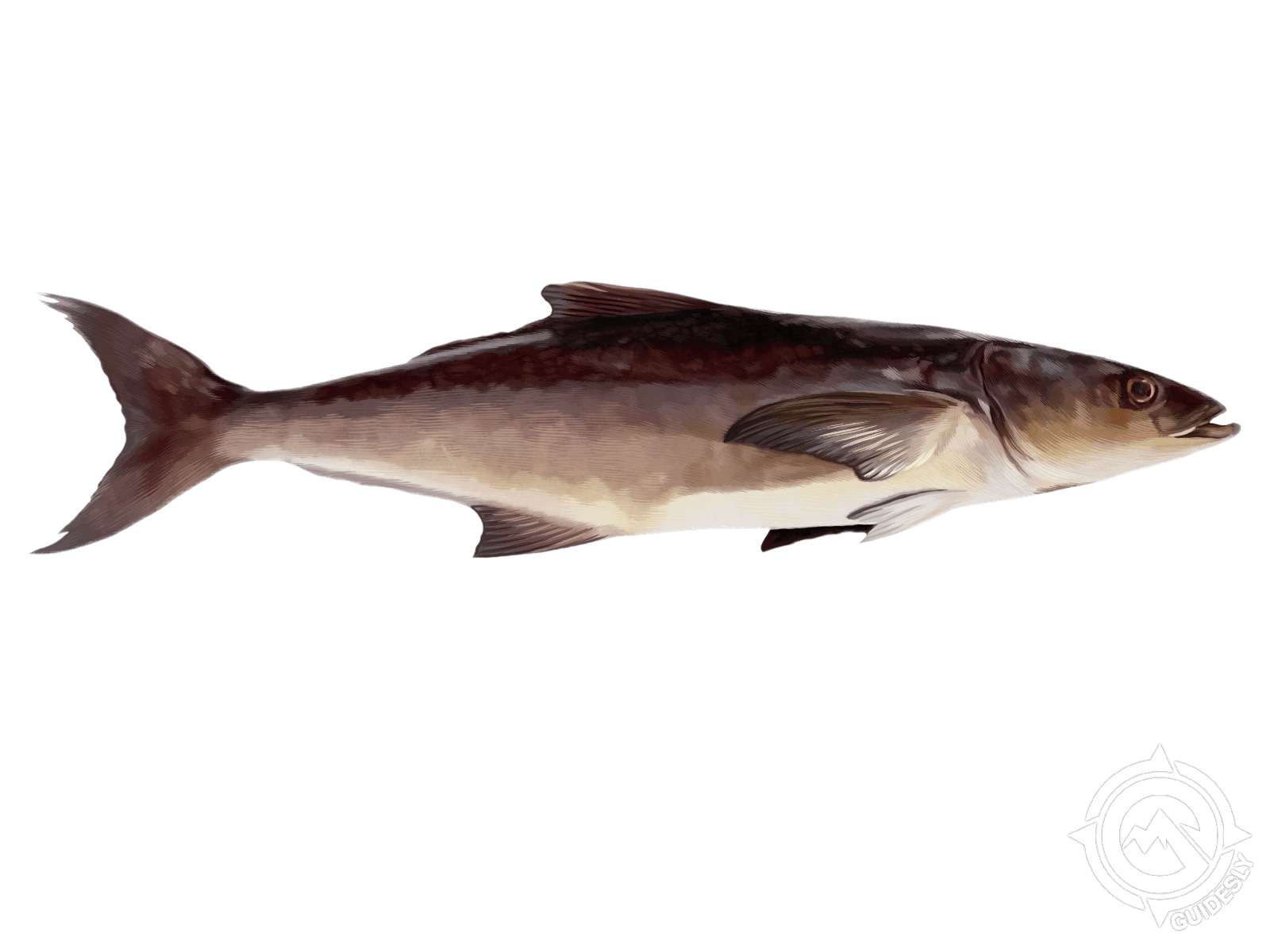
Cobia Overview
The Cobia (Rachycentron Canadum) is a remarkable and solitary predator belonging to the family Rachycentridae and order Perciformes. This dark brown fish with a distinctive lighter belly is often mistaken for a shark due to its single dorsal fin, making it one of the most visually intriguing species to encounter whether you're fishing off the coast of Florida or exploring offshore structures in the Gulf of Mexico. What makes the Cobia truly special is that it's the only member of its family found in North American waters, and juvenile fish display absolutely stunning colorations with black and white stripes accented by orange, bronze, and green splashes. Anglers and seafood enthusiasts alike prize this species for its aggressive predatory behavior, firm meat texture, and excellent flavor, making it a genuine prize catch for both sport and culinary purposes.
The Cobia's solitary nature sets it apart from most game fish—they don't school except during spawning season, which means every encounter feels like a personal victory. This behavior has made them impossible to target commercially through traditional net fishing, so nearly all Cobia sold in restaurants comes from aquaculture operations, often commanding premium prices. If you're seeking an exciting fishing experience with a fish that's both challenging to locate and absolutely delicious, the Cobia should be high on your list.
Cobia Habitat and Distribution
Cobia thrive in warm temperate and tropical waters throughout the Atlantic Ocean, Caribbean Sea, Indian Ocean, and Pacific coastal regions near Australia and Japan. In North America, they're most abundant from Virginia down through the Gulf of Mexico, with seasonal migrations that create predictable fishing opportunities. These fish are overwhelmingly pelagic—meaning they inhabit the upper ocean layers—yet they'll venture into estuaries and mangrove systems when hunting for food. While typically found at depths of 30 feet or less during spring migrations, they can descend to 300 feet, particularly around offshore oil rigs and deep-water structures.
You'll find Cobia congregating around reefs, wrecks, buoys, harbors, and man-made structures that provide shelter and concentrate prey. During late fall and winter, Atlantic populations migrate south and offshore toward warmer waters, while those found in the northeastern Gulf of Mexico during summer months move into south Florida waters and the Florida Keys. Their ability to inhabit a wide range of temperatures and salinities makes them adaptable hunters, yet they remain faithful to structural habitats that offer hunting advantages. Current breaks and rip lines created by these structures are particularly productive zones where fish gather to feed.
Cobia Size and Weight
An average adult Cobia reaches approximately 6 feet in length and weighs around 100 pounds, making them a substantial and respectable catch for any angler. The size range you're likely to encounter spans from 24 inches on the smaller end to 79 inches for truly trophy specimens, with weights varying from 10 pounds for smaller juveniles to impressive 80-pound-plus fish in peak condition. The largest Cobia ever landed on a rod and reel was caught in Shark Bay, Australia, and tipped the scales at a remarkable 135 pounds—a testament to the species' potential for growing quite large in ideal conditions. These fish typically live up to 12 years in the wild, giving them plenty of time to develop into formidable predators that test the skills of experienced anglers.
Cobia Diet and Behavior
Cobia are strong, aggressive predators with a diverse diet centered primarily on crustaceans, though they'll readily consume smaller fish and squid when available. Their feeding strategy is opportunistic and forceful—they actively hunt by sight and actively pursue prey with considerable speed and power. As solitary hunters, they don't rely on schooling behaviors to corner prey; instead, they position themselves around structures and current breaks where prey naturally concentrates. Young Cobia face predation pressure from larger pelagic fish, which helps regulate population dynamics in their ecosystems.
The solitary nature of Cobia makes them fascinating from a behavioral standpoint. Except during spawning seasons, they remain spread out and rarely concentrate together, which is why you'll seldom see a group of them clustered in one area. This individualistic behavior means anglers must rely on sight-fishing techniques or deep structural knowledge rather than simply casting into schools. Their strong, intelligent predatory instincts make them exciting to pursue—they're not passive feeders but active hunters that respond decisively to properly presented lures and baits.
Cobia Spawning and Seasonal Activity
Cobia mature relatively young compared to many ocean fish—females reach sexual maturity at age 3, while males mature at age 2. The spawning season varies by geographic location, occurring from June to August in the Southeast US and shifting to August through October in the Gulf of Mexico. During their spawning periods, these fish congregate in coastal bays and estuaries, creating reliable fishing opportunities for anglers who time their trips correctly. Females release an astonishing up to 2 million eggs each time they spawn, though they spawn multiple times throughout the season, ensuring significant reproductive output.
The spring migration period is particularly productive for anglers, as fish move from deeper winter habitat into shallower spawning grounds. This predictable movement creates concentrated fishing opportunities in traditional hotspots. After spring spawning migrations conclude, Cobia disperse to reef and wreck structures that serve as their summer haunts. Understanding these seasonal movements is crucial to successful Cobia fishing—spring migrations and spawning periods concentrate fish in specific locations, while summer and fall fishing requires more detailed knowledge of structural habitats where solitary fish hide and hunt.
Cobia Techniques for Observation and Capture
Sight Fishing During Migrations: During the spawning season and spring migration periods, target Cobia in water depths around 30 to 70 feet by sight fishing—looking for the fish just below or breaking the water's surface. This technique is thrilling because you'll often see the fish before casting, allowing you to make precise presentations. Polarized sunglasses are essential for spotting these distinctive silhouettes. Around coastal Florida and the Gulf of Mexico during peak season (spring months), you might spot Cobia cruising near the surface hunting for baitfish, presenting incredible visual fishing opportunities.
Structure-Based Fishing: After spring spawning migrations conclude, shift your focus to reefs, wrecks, and other structural features where Cobia spend their summer months. Look specifically for rip lines or current breaks created by these structures—these are prime feeding zones where fish concentrate to ambush passing prey. Jigs in the 4 to 8 ounce range are the most popular lures for structure fishing, though don't hesitate to experiment with lighter jigs in shallower areas. Cast your jig near the structure and work it through the water column with steady, deliberate movements.
Lure Selection and Presentation: Cobia respond well to various lures including crankbaits, topwater plugs, jigs, and imitation eel baits, though bucktail jigs remain the most reliable choice, especially around reefs and structures. Interestingly, color doesn't seem to matter nearly as much as many anglers believe—experienced guides report consistent success with virtually all color combinations. The key is presenting your lure with confidence in the right habitat at the right time, allowing the lure's action and vibration to trigger aggressive strikes from these predatory fish.
Cobia Culinary and Utilization Notes
Cobia is prized as excellent table fare, valued for its firm texture, white meat, and outstanding flavor that appeals to both home cooks and professional chefs. The fish's culinary qualities have made it increasingly important to the seafood industry, with farm-raised operations now supplying most commercial markets. Because wild Cobia are solitary and difficult to catch commercially through conventional fishing methods, virtually all restaurant-quality Cobia comes from aquaculture operations, which explains its typically premium pricing on seafood menus. The firm flesh holds up beautifully to grilling, baking, pan-searing, or poaching, and the mild, slightly sweet flavor pairs well with classic seafood preparations and lighter sauces.
From a nutritional standpoint, Cobia provides excellent protein content and healthy omega-3 fatty acids, making it a nutritious choice for health-conscious diners. The meat's natural succulence means minimal fat addition is needed during cooking, allowing the fish's pure flavor to shine through. Whether you're catching your own or purchasing from a quality seafood vendor, Cobia delivers a memorable eating experience that justifies the effort required to pursue this challenging and rewarding species.
Cobia Frequently Asked Questions
Q: What is the best bait or lure for catching Cobia?
A: Bucktail jigs in the 4 to 8 ounce range are the most popular and productive choice, especially around reefs and structures. However, Cobia also respond well to crankbaits, topwater lures, and imitation eel baits. Interestingly, color doesn't seem to significantly impact success rates—focus instead on proper presentation, correct depth, and fishing prime structural areas. Experiment with different weights and styles until you find your preferred technique.
Q: Where can I find Cobia near major fishing destinations?
A: Cobia are most abundant from Virginia south through the Gulf of Mexico. In spring, fish concentrated bays and estuaries during spawning migrations around depths of 30 to 70 feet. Summer and fall, shift focus to reefs, wrecks, and offshore structures. Areas like the Florida Keys, the northeastern Gulf of Mexico, and coastal structures off Texas and Louisiana consistently produce excellent Cobia fishing opportunities throughout the year.
Q: Is Cobia good to eat?
A: Absolutely! Cobia is considered excellent table fare with firm, white meat and outstanding flavor. It's prized by seafood professionals and home cooks alike. The meat's natural succulence and mild taste make it versatile for various cooking methods—grilling, baking, pan-searing, and poaching all produce delicious results. Most commercial Cobia comes from farm-raised operations, as wild fish are difficult to catch commercially due to their solitary nature, which is why restaurant-quality Cobia commands premium prices.
Q: When is the best time to catch Cobia?
A: Spring migration and spawning season (June to August in the Southeast US, August to October in the Gulf of Mexico) creates the most concentrated and productive fishing. During these periods, fish move into predictable shallow spawning grounds, making them easier to locate through sight fishing. Summer months offer excellent structure-based fishing around reefs and wrecks, while fall can be productive as well. Winter sees fish move to deeper, warmer offshore waters, making them less accessible to shore and nearshore anglers.
Q: How can I distinguish a Cobia from other fish species?
A: Cobia have a distinctively dark brown body with a lighter belly and a single dorsal fin, which often causes confusion with sharks. Juvenile fish display striking black and white stripes with orange, bronze, and green splashes. The Cobia's body is much more stout than its cousin, the Remora (or suckerfish), and notably lacks the dorsal sucker characteristic of Remora species. Once you've seen a Cobia in person or in clear photos, you'll recognize the distinctive silhouette immediately.
Q: What makes Cobia different from other game fish in their habitat?
A: Unlike most game fish, Cobia are solitary hunters and rarely school except during spawning season. This behavior makes traditional commercial fishing methods ineffective, resulting in virtually all market Cobia coming from aquaculture. For anglers, this means you're fishing for individual fish rather than schools, requiring either sight-fishing skills or detailed knowledge of structural habitats. Their strong, aggressive predatory nature and excellent table quality make every successful catch a meaningful achievement rather than one in a series of easy catches.